
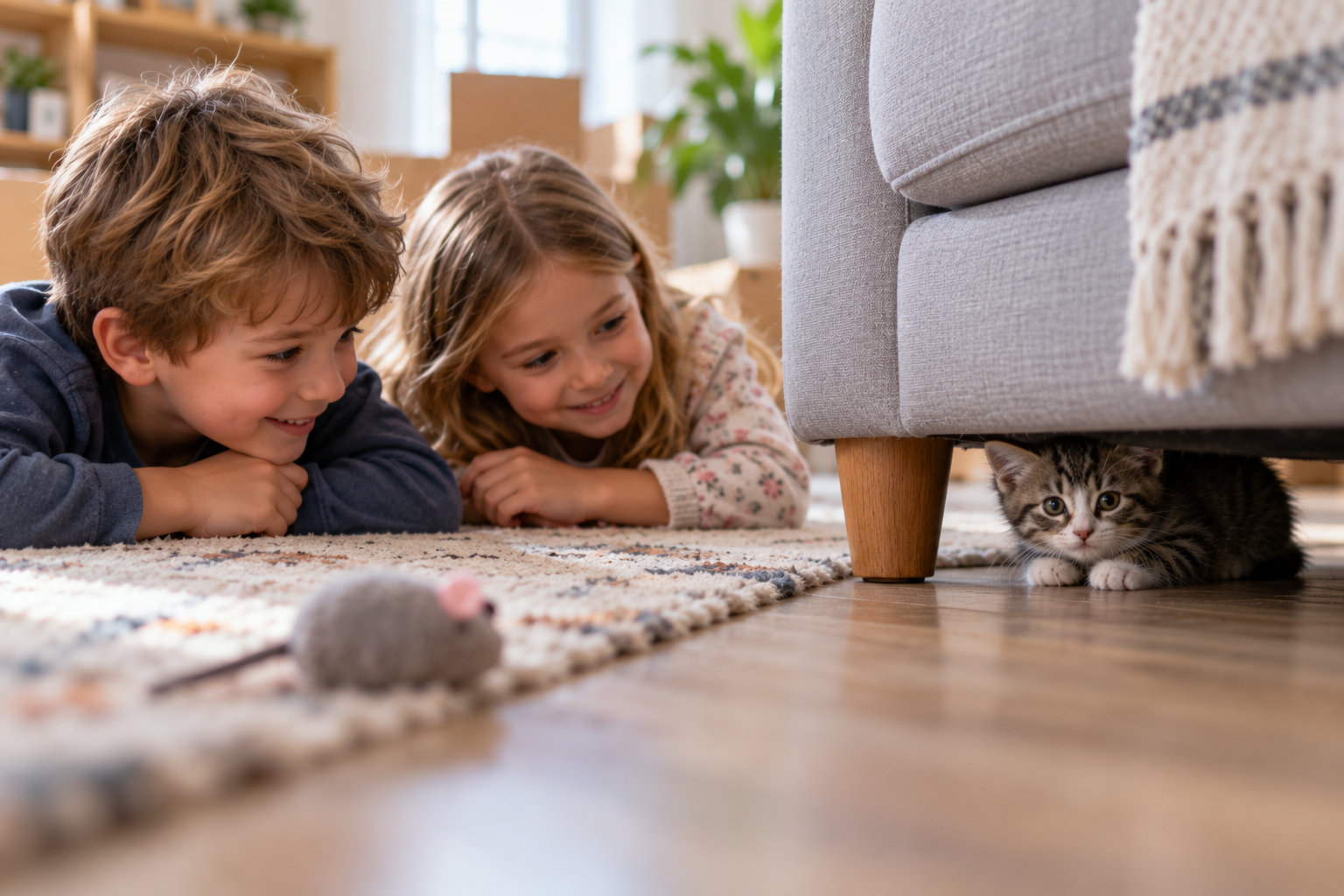
Bringing a new kitten home is exciting, but your kitten may need some time to feel the same way. A new home means unfamiliar people, smells, sounds, and surroundings, so it is normal for a kitten to be cautious, hide, or take some time to explore.
The good news is that there are simple things you can do to help your new kitten feel safe and comfortable while they adjust.
Start With a Small, Safe Space
It can be tempting to let your new kitten explore the entire house immediately, but starting small is usually better.
Set up a quiet room or designated area with everything your kitten needs, including food, fresh water, a litter box, a comfortable place to sleep, toys, and somewhere to hide. Keep food and water separate from the litter box.
Starting in one room gives your kitten a chance to learn their new surroundings without becoming overwhelmed. Once they seem comfortable and confident, you can gradually let them explore more of the home.
Give Your Kitten Time to Come to You
Some kittens will start exploring within minutes. Others may hide for a while. Both reactions can be normal.
Try not to force your kitten out of a hiding place or constantly pick them up. Spend time nearby, speak calmly, offer toys or treats, and let your kitten approach you when they feel comfortable.
Building trust at your kitten’s pace can help them become more confident in their new home.
Keep Their Routine Simple and Consistent
Routine can make a new environment feel more predictable. Try to keep feeding, playtime, and bedtime reasonably consistent while your kitten settles in.
If you know what food and litter your kitten was using before coming home, keeping those familiar at first may also make the transition easier. Sudden changes can add another unfamiliar experience when your kitten is already adjusting to a lot.
Kitten-Proof Your Home Before They Explore
Kittens are curious, and once they become comfortable, they can get into almost anything.
Before giving your kitten access to more rooms, check for loose cords, strings, small objects they could swallow, unsecured windows and doors, accessible trash, toxic household products, and small spaces where they could become trapped.
Providing safe places to climb, scratch, play, and hide also gives your kitten appropriate ways to explore their new environment.
Introduce Other Pets Slowly
If you already have a cat or dog, avoid rushing the introduction. Your new kitten and your existing pet both need time to adjust.
Start by keeping them in separate spaces. You can gradually introduce their scents before moving on to short, supervised interactions. Taking things slowly can reduce stress and help both pets become comfortable with each other’s presence.
How Long Does It Take a Kitten to Adjust to a New Home?
There isn’t one timeline that applies to every kitten. Personality, previous experiences, age, other pets in the home, and the environment can all affect how quickly a kitten settles in.
Pay attention to your kitten instead of the calendar. Eating normally, using the litter box, playing, exploring, sleeping comfortably, and approaching you voluntarily are all encouraging signs that your kitten is beginning to feel at home.
If your kitten shows sudden or concerning changes in behavior or you are worried about their health, contact your veterinarian.
Give Them Time to Feel at Home
Helping a kitten adjust to a new home is mostly about creating a safe environment and giving them time. Provide the essentials, establish a routine, introduce new experiences gradually, and allow your kitten to build confidence at their own pace.
Before long, that unfamiliar house can start feeling like home.
At Petineeds, we’re building a simpler way for pet parents to find the everyday pet essentials, practical information, and community they need to care for the animals they love.
Leave a Reply