
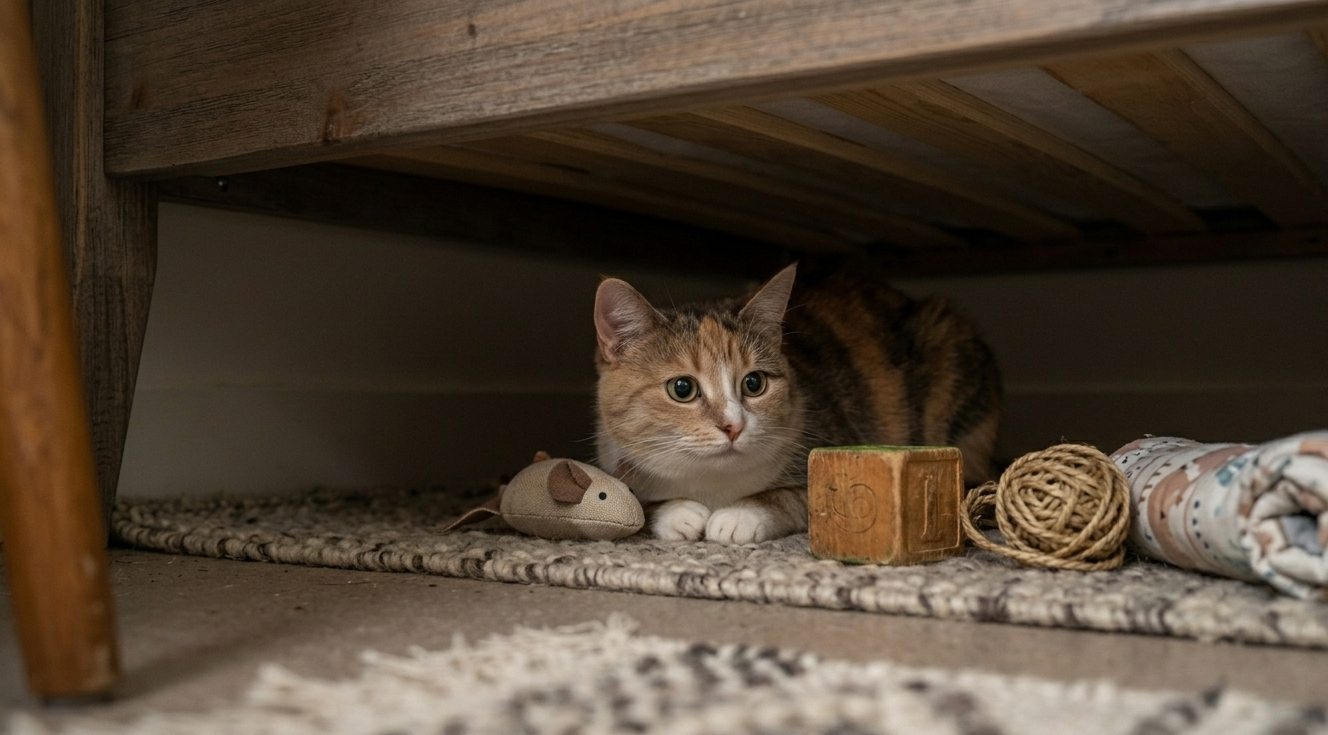
Your new cat is hiding under the bed. It’s been three days. They won’t come out to eat, won’t use the litter box, and definitely won’t let you pet them. You’re starting to panic.
Maybe you’re wondering if they hate you. Maybe you’re worried you did something wrong. Maybe you’re regretting the adoption entirely and feeling terrible about it.
Here’s the truth: this is completely normal.
Bringing a new cat home is stressful—for you and especially for them. Cats are territorial, cautious creatures. A new environment feels overwhelming and scary. Hiding, refusing to eat, and avoiding contact are all standard responses.
Your cat doesn’t hate you. They’re just scared. And with the right approach, they will adjust. This article will walk you through how to introduce a new cat to your home in a way that reduces stress, builds trust, and helps them settle in without the drama.
Why New Cats Hide (And Why That’s Okay)
Let’s start by understanding what your cat is experiencing.
Imagine being dropped into a completely unfamiliar place with new smells, new sounds, and new people. You don’t know where the exits are. You don’t know if it’s safe. You don’t know who to trust.
That’s what your new cat is going through.
Common new cat behaviors:
Hiding. Under beds, in closets, behind furniture. This is their survival instinct kicking in. Hiding = safety.
Not eating or drinking. Stress suppresses appetite. Many cats won’t eat for the first 24-48 hours.
Not using the litter box. Fear can make them hold it or go in strange places.
Hissing or growling. Defensive behavior. They’re scared, not mean.
Excessive grooming or not grooming at all. Both are stress responses.
All of this is normal. It doesn’t mean you made a mistake or that your cat will be like this forever.
Most cats take 3-7 days to start coming out of their shell. Some take weeks. And that’s okay.
The Right Way to Introduce a New Cat to Your Home
Here’s the step-by-step process that actually works.
Step 1: Set Up a Safe Room (Before Your Cat Arrives)
Do not let your new cat loose in the entire house on day one.
Cats need a small, secure space to decompress. This is non-negotiable.
How to set up a safe room:
Choose one quiet room—a bedroom, bathroom, or office works well. Make sure it has a door you can close.
Set up the room with:
- Litter box (in one corner)
- Food and water bowls (far from the litter box)
- Cozy hiding spots (cat bed, cardboard box, open carrier)
- A few toys
- Scratching post or pad
- Your scent (an old t-shirt you’ve worn)
This room is their entire world for the first few days. It should feel safe, not overwhelming.
Step 2: Let Them Hide (Seriously, Just Let Them)
When you first bring your cat home, they will probably run straight under the bed or into the closet.
Do not drag them out. Do not force interaction. Do not hover.
Here’s what to do instead:
Set up their food, water, and litter box. Sit quietly in the room for 10-15 minutes. Talk softly if you want, but don’t try to touch them.
Then leave. Let them explore on their own terms.
Check in a few times a day—sit on the floor, read a book, talk gently. But don’t force contact.
Your cat will come out when they feel safe. This might take hours or days. Be patient.
Step 3: Let Them Set the Pace
The biggest mistake people make with new cats is rushing.
Signs your cat is starting to relax:
- Eating and drinking when you’re not around
- Using the litter box
- Grooming themselves
- Peeking out from their hiding spot
- Making eye contact
- Slow blinking at you (this is a sign of trust)
When you see these signs, you can start gently increasing interaction.
How to interact:
Sit on the floor at their level. Let them approach you—don’t approach them.
Extend one finger for them to sniff (like a cat “handshake”).
If they rub against you, gently pet them. If they retreat, back off.
Use treats or a feather toy to encourage play, but don’t force it.
Let them lead. Always.
Step 4: Gradually Expand Their Territory
Once your cat is confidently moving around their safe room, eating regularly, and seeking you out for attention (usually after 5-10 days), you can start expanding their space.
How to expand gradually:
Open the door to the safe room and let them explore one additional room at a time. Don’t force them out—let them venture out when they’re ready.
Keep their safe room accessible. They should always be able to retreat.
Add a second litter box and water bowl in the new area.
Spend time in the new space so they associate it with your presence.
Over the course of 1-2 weeks, let them explore more of the house at their own pace.
Step 5: Build Trust Through Routine
Cats feel safer when life is predictable.
Create a routine:
- Feed at the same times every day
- Play with them at consistent times (morning and evening work well)
- Keep litter boxes clean
- Be calm and quiet around them
Routine = security. Your cat will start to relax when they know what to expect.
Introducing a New Cat to Other Pets
If you have other cats or dogs, the process is more complex.
Never introduce pets face-to-face immediately. This causes stress, fear, and aggression.
Follow these steps instead:
Step 1: Scent swapping. Before any visual contact, let your pets get used to each other’s smells. Swap bedding, rub a towel on one pet and place it near the other, feed them on opposite sides of a closed door.
Step 2: Controlled visual contact. After a week of scent swapping, let them see each other through a baby gate or cracked door. Feed them on opposite sides. Reward calm behavior.
Step 3: Supervised meetings. Once they’re calm with visual contact, allow short, supervised interactions. Keep the new cat’s safe room available.
Step 4: Gradual increase. Slowly extend time together. Watch body language. Separate them if anyone seems stressed.
This process can take 2-4 weeks. Rushing leads to fights, injuries, and long-term animosity.
Common New Cat Problems (And How to Fix Them)
Problem: My Cat Won’t Eat
Why it happens: Stress suppresses appetite.
Solution:
- Try different foods (wet food, tuna, chicken)
- Warm food slightly to make it more aromatic
- Hand-feed small amounts
- Give them space—many cats won’t eat while you watch
- If they haven’t eaten in 48 hours, call your vet
Problem: My Cat Is Aggressive
Why it happens: Fear-based aggression. Your cat feels threatened.
Solution:
- Give them more space and time
- Avoid direct eye contact (it’s threatening to cats)
- Don’t corner them or force interaction
- Use treats and toys to build positive associations
- If aggression persists or escalates, consult a vet or behaviorist
Problem: My Cat Won’t Use the Litter Box
Why it happens: Stress, fear, litter box location, or the type of litter.
Solution:
- Make sure the litter box is in a quiet, accessible spot
- Try a different type of litter (unscented, fine-grain)
- Add a second litter box
- Clean accidents with enzyme cleaner
- If accidents continue, rule out medical issues with your vet
Problem: My Cat Hides 24/7
Why it happens: Extreme fear or a very shy personality.
Solution:
- Be patient. Some cats take weeks to adjust.
- Sit quietly in the room without trying to interact
- Use food, treats, or toys to encourage them out
- Try Feliway (synthetic cat pheromones) to reduce stress
- If there’s no improvement after 2-3 weeks, consult your vet
Signs Your Cat Is Adjusting
How do you know it’s working?
Positive signs:
- Eating and drinking regularly
- Using the litter box consistently
- Grooming themselves
- Playing with toys
- Seeking you out for attention
- Sleeping in open areas (not just hiding)
- Exploring the house confidently
- Purring, kneading, slow blinking
Adjustment isn’t linear. Your cat might have confident days and scared days. That’s normal.
When to Seek Professional Help
Most cats adjust with time and patience. But sometimes you need help.
Consider calling your vet or a cat behaviorist if:
- Your cat hasn’t eaten in 48+ hours
- Aggression is severe or escalating
- They’re not using the litter box after 2 weeks
- They show signs of illness (vomiting, diarrhea, lethargy)
- No improvement after 3-4 weeks of patient effort
Medical issues can cause or worsen behavioral problems. Always rule those out first.
You’re Not Doing It Wrong
If your new cat is hiding under the bed and you’re feeling like a failure, stop.
You’re not failing. Your cat isn’t broken. This is just part of the process.
Adopting a cat is a beautiful thing, but it’s not like the movies. There’s no instant bond. It takes time for your cat to feel safe, trust you, and understand that this is home.
Some cats bounce back in 3 days. Others take 3 weeks. A few take months. All of these are normal.
The fact that you’re here, reading this, trying to help your cat adjust—that’s what makes you a good cat parent.
Be patient. Give them space. Let them come to you. They will.
Moving Forward: Building a Bond with Your New Cat
Introducing a new cat to your home isn’t about forcing them to love you immediately. It’s about creating an environment where they feel safe enough to relax.
Start small. Use a safe room. Let them hide. Move at their pace. Build trust through routine and patience.
Eventually, your scared, hiding cat will start to explore. They’ll rub against your legs. They’ll purr. They’ll curl up next to you. And when they do, it’ll be because they chose to trust you.
That trust is worth the wait.
Your cat doesn’t need you to be perfect. They just need you to be patient, consistent, and kind.
You’re doing great. Your cat is going to be fine. And soon, you’ll have a confident, happy companion who feels safe and loved in their new home.
Give it time. You’ve got this.
Leave a Reply