
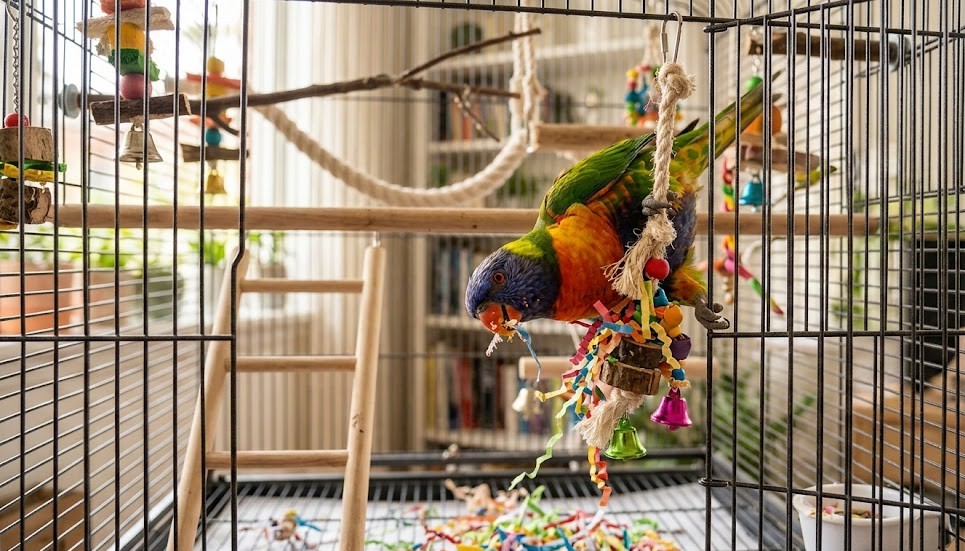
Your parrot screams. A lot. Or maybe they’ve started plucking their feathers. Or they just sit on their perch all day, looking… sad. And you’re standing there wondering if you’re doing something wrong.
You love your parrot. You feed them, clean their cage, talk to them. But something still feels off. Maybe a friend mentioned that parrots need “enrichment,” and now you’re spiraling—what does that even mean? Are you failing your bird?
Here’s the truth: parrots are incredibly intelligent, social creatures who get bored easily. In the wild, they’d spend hours foraging, flying, and interacting with their flock. In captivity, without the right mental and physical stimulation, they can become stressed, destructive, or depressed.
If you’re asking yourself “how to keep my parrot happy,” you’re already on the right track. This article will give you simple, practical enrichment ideas that work—without needing a degree in avian behavior or spending hundreds of dollars.
Why Parrot Enrichment Matters
Let’s start with why this is so important.
Parrots are smart. Really smart. Studies show they have the cognitive abilities of a 3-5 year old human child. Now imagine leaving a toddler in a room with nothing to do for 8-10 hours a day. That’s what happens when a bored parrot sits in a cage with no stimulation.
Without enrichment, parrots develop behavioral problems:
Screaming. Excessive, ear-splitting vocalizations that drive you (and your neighbors) crazy.
Feather plucking. Self-destructive behavior that can lead to serious health issues.
Aggression. Biting, lunging, or refusing to interact.
Depression. Listlessness, loss of appetite, withdrawn behavior.
These aren’t signs your parrot is “bad.” They’re signs your parrot is under-stimulated and stressed.
The good news? Parrot enrichment doesn’t have to be complicated. Small changes can make a huge difference in your bird’s mental health and happiness.
What Does Parrot Enrichment Actually Mean?
Enrichment is anything that engages your parrot’s mind and body. It mimics the natural behaviors they’d perform in the wild: foraging, exploring, problem-solving, socializing, and physical activity.
Think of it this way: if your parrot’s life feels predictable and boring, enrichment makes it interesting and engaging.
There are several types of enrichment:
Physical enrichment: Climbing, flying, playing with toys.
Foraging enrichment: Working for food instead of just eating from a bowl.
Social enrichment: Interaction with you, other birds, or activities.
Sensory enrichment: New sights, sounds, textures, and experiences.
Cognitive enrichment: Puzzles and problem-solving activities.
Your parrot needs a mix of all these to stay happy and healthy.
Simple Enrichment Ideas for Bored Parrots
Let’s get into the practical stuff. Here are easy, affordable ways to keep your parrot entertained.
1. Foraging Toys and Activities
In the wild, parrots spend hours searching for food. Foraging isn’t just about eating—it’s a mentally stimulating activity that keeps them engaged.
Simple foraging ideas:
Wrap treats in paper. Use plain paper or newspaper (no ink) to wrap nuts, seeds, or dried fruit. Your parrot has to tear through the paper to get the reward.
Hide food in toys. Stuff treats inside foraging balls, puzzle toys, or cardboard tubes.
Paper bag surprise. Put some treats inside a paper bag and let your parrot shred it to pieces.
Skewer fruits and veggies. Thread pieces of fresh produce onto a stainless steel skewer or safe bird kabob. It takes longer to eat and provides enrichment.
DIY foraging box. Fill a shallow box with shredded paper, crinkled newspaper, or safe nesting material. Hide treats throughout and let your parrot dig.
Foraging toys don’t have to be expensive. Even crumpled paper balls with a hidden almond inside can keep a parrot busy for 20 minutes.
2. Rotate Toys Regularly
Parrots get bored with the same toys. If the same three toys have been in the cage for months, your bird has probably stopped caring about them.
How to rotate toys:
Keep a collection of 10-15 toys. Only put 3-4 in the cage at a time. Every week, swap them out for different ones. When you bring back an “old” toy after a few weeks, it feels new again.
Mix up toy types:
- Chewable toys (wood, palm, cardboard)
- Shredding toys (paper, leather strips, sisal)
- Puzzle toys (foraging balls, treat dispensers)
- Noise-making toys (bells, crinkly materials)
- Swinging toys (ropes, perches)
Different textures and activities keep things interesting.
3. Out-of-Cage Time
Parrots should not live their entire lives in a cage. They need daily time outside to stretch, explore, and interact.
Safe out-of-cage activities:
Playstands and gyms. Set up a play area with perches, toys, and food bowls where your parrot can hang out while you’re in the room.
Supervised exploration. Let your parrot explore a bird-safe room (windows covered, no ceiling fans, no toxic plants).
Shoulder time. Many parrots love just being near you while you go about your day.
Training sessions. Teach tricks, target training, or step-up practice. Mental stimulation + bonding time.
Even 30 minutes to an hour of out-of-cage time daily can drastically improve your parrot’s quality of life.
4. Foraging Opportunities During Meals
Stop serving food in a bowl like it’s a buffet. Make your parrot work for it.
Meal enrichment ideas:
Scatter feeding. Toss pellets or seeds around the bottom of the cage so your parrot has to search for them.
Food puzzles. Use bird-safe puzzle feeders that require problem-solving.
Hang veggies. Clip leafy greens or veggie chunks to the cage bars with a clothespin.
Ice cube treats. Freeze berries or chopped veggies in ice cubes. Your parrot has to work as the ice melts.
Foraging extends mealtime from five minutes to an hour or more.
5. Social Interaction and Training
Parrots are flock animals. They need social interaction to stay mentally healthy.
How to provide social enrichment:
Talk to your parrot. Even if you’re busy, narrate what you’re doing. Parrots love hearing your voice.
Training sessions. Teach your parrot new tricks or behaviors. It’s mentally stimulating and strengthens your bond.
Music and videos. Some parrots enjoy bird videos, nature sounds, or music when you’re not home. It’s not a substitute for interaction, but it helps.
Include them in family time. Bring your parrot’s playstand into the living room while you watch TV or read. They just want to be near you.
Loneliness is a huge stressor for parrots. Even passive time together matters.
6. Sensory Enrichment: New Experiences
Parrots are naturally curious. Introducing new sights, sounds, and textures keeps their brains engaged.
Sensory enrichment ideas:
Change cage layout. Move perches, toys, and food bowls around every few weeks. It makes the cage feel new.
Safe branches. Bring in fresh, bird-safe branches (apple, willow, manzanita) for climbing and chewing.
Texture variety. Offer materials like cork, seagrass mats, bamboo, or natural loofah.
Bird-safe mirrors. Some parrots love mirrors (though not all—watch for obsessive behavior).
Window perches. Let your parrot watch the world outside. Birds, trees, and activity provide visual stimulation.
Novelty = engagement.
7. DIY Enrichment on a Budget
You don’t need to spend a fortune on parrot toys and activities.
Cheap or free enrichment ideas:
Cardboard boxes. Let your parrot destroy a clean cardboard box. Instant entertainment.
Paper towel rolls. Stuff them with treats and fold the ends closed.
Coffee filters. Hide treats inside folded coffee filters.
Popsicle sticks. Create DIY shredding toys by bundling untreated wood sticks.
Egg cartons. Clean cardboard egg cartons make great foraging puzzles.
Phone book pages. (If those still exist.) Let your parrot shred them.
Parrots love destroying things. Give them safe, appropriate stuff to destroy.
How to Tell If Your Parrot’s Enrichment Is Working
How do you know if your parrot is happier?
Signs of a well-enriched parrot:
Less screaming. They’re busy doing other things instead of demanding attention constantly.
More playfulness. They interact with toys, forage, and explore.
Better feather condition. If they were plucking, it may reduce (though severe plucking needs vet attention).
Healthy appetite. Engaged parrots eat well.
Curious and alert. They show interest in their environment and activities.
Positive interaction with you. They’re more willing to step up, train, or just hang out.
Enrichment won’t solve every behavioral issue overnight, but consistency makes a difference.
When to Seek Professional Help
Sometimes behavioral problems go beyond boredom.
Consider talking to an avian vet or certified parrot behaviorist if:
- Feather plucking is severe or getting worse
- Your parrot is aggressive and nothing improves
- They refuse to eat or lose weight
- Behavior changed suddenly and dramatically
- You’ve tried enrichment consistently for weeks with no improvement
Medical issues (pain, illness, hormones) can cause behavior changes. Rule those out first.
You’re Not Failing Your Parrot
If you’re reading this feeling guilty, stop.
Most people don’t know how much mental stimulation parrots need until they already have one. You’re not a bad parrot owner for not knowing. You’re a good one for trying to learn.
Parrots are demanding pets. They’re not like fish or hamsters. They need attention, variety, and engagement. That’s a lot.
But here’s the thing: small efforts add up. You don’t have to become a full-time parrot entertainer. Even adding a few foraging opportunities, rotating toys, and spending quality time together makes a huge difference.
Your parrot doesn’t need perfection. They need you to care enough to try. And you clearly do.
Moving Forward: Keeping Your Parrot Happy Long-Term
So, how do you keep your parrot happy? By making enrichment part of your routine.
Start small:
- Rotate toys once a week
- Add one foraging activity daily
- Give out-of-cage time every day
- Interact during meals and downtime
You don’t have to overhaul everything at once. Pick one or two enrichment ideas from this article and start there. Build from what works.
Your parrot didn’t come with an instruction manual. You’re figuring this out as you go, and that’s okay. The fact that you’re here, learning about parrot enrichment and how to keep your bird happy, means you’re doing exactly what your parrot needs.
They’re lucky to have you.
Leave a Reply