
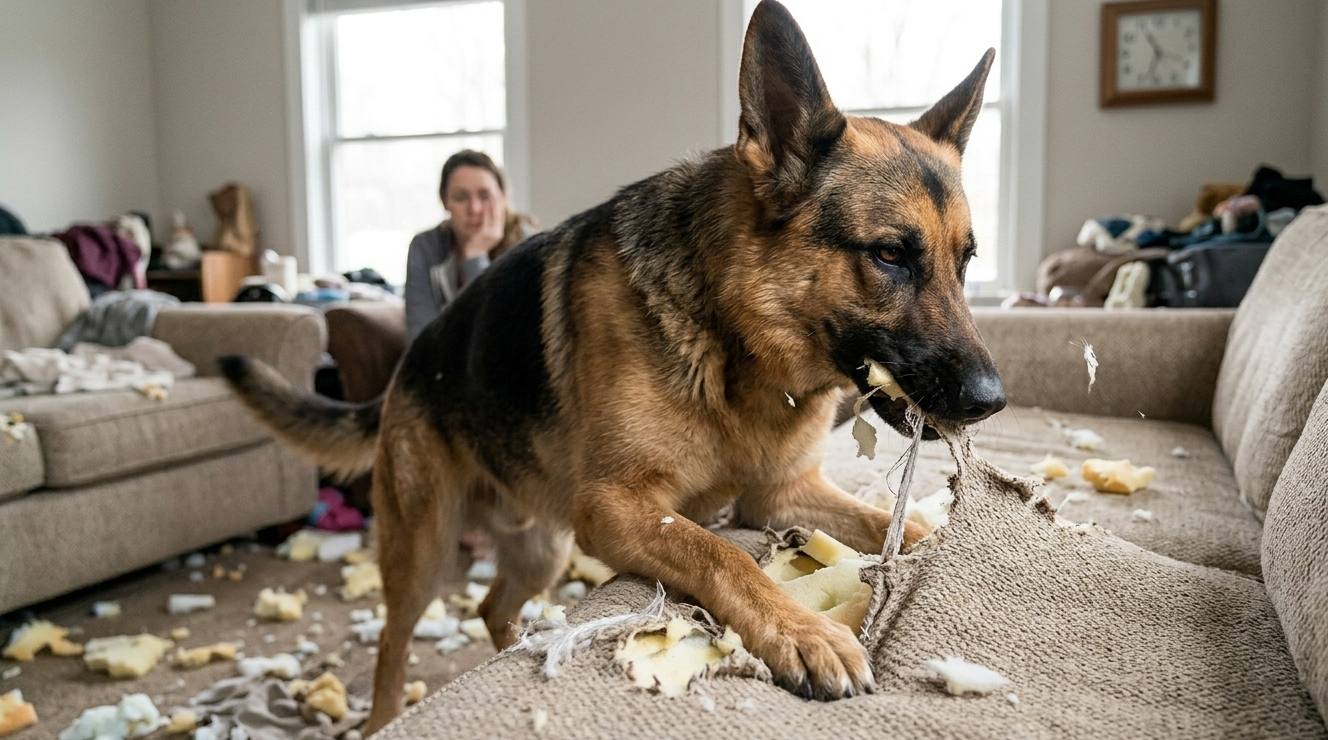
I gave away my dog.
There. I said it.
Not “rehomed” in some gentle, sanitized way. Not “found him a better situation” to make myself sound noble. I gave away a dog I adopted, and a lot of people think that makes me a terrible person.
But here’s the thing: I’m not sorry.
I’m not sorry because keeping him would have been worse—for me, for my family, and honestly, for him.
This isn’t a story about redemption or how everything worked out and I realized I should have tried harder. This is a story about making a hard, guilt-ridden, life-altering decision and standing by it even when people judge you for it.
If you’re reading this because you’re considering rehoming your dog and you feel like a monster, I want you to know: you’re not. Sometimes rehoming is the kindest, most responsible thing you can do.
How I Ended Up with a Dog I Couldn’t Handle
His name was Diesel. He was a 2-year-old German Shepherd mix I adopted from a rescue.
I’d wanted a dog for years. I’d done research. I’d read books. I’d watched training videos. I thought I was ready.
The rescue told me Diesel was “high energy but trainable.” They said he’d need exercise and structure, but that he was good with people and just needed a patient owner.
What they didn’t tell me—or didn’t know—was that Diesel had severe anxiety, reactivity issues, and a bite history.
The first week was rough, but I told myself it was an adjustment period. New home, new people, new routine. Of course he was stressed.
The second week, he bit my partner. Not a nip—a full bite that broke skin and left a bruise. My partner had reached for Diesel’s collar to redirect him, and Diesel snapped.
I made excuses. He was scared. We moved too fast. We’d be more careful.
The third week, he lunged at a kid on a walk. I managed to pull him back, but it was close. Too close.
By week four, I was having panic attacks every time I left the house because I didn’t know what he’d do while I was gone. He’d destroyed two doors trying to escape his crate. He barked nonstop for hours. The neighbors complained.
I hired a trainer. She came once, watched Diesel lunge at her, and said, “This dog needs a professional behaviorist and possibly medication. This is beyond my scope.”
The behaviorist cost $300 for a consultation. She said Diesel needed intensive behavior modification, possibly lifelong management, and that he was not safe in a home with children, other pets, or anyone inexperienced with reactive dogs.
I didn’t have children. But I also didn’t have $3,000 for a training program. I didn’t have the emotional capacity to manage a dog who might bite someone. And I definitely didn’t have the experience to handle a dog this difficult.
I started researching rehoming options.
The Guilt Was Crushing
I can’t overstate how terrible I felt.
Every article I read, every social media post, every conversation with other dog owners came back to the same message: You made a commitment. Real pet owners don’t give up.
I felt like a failure.
I cried every day. I barely slept. I kept thinking: If I were a better person, I could handle this. If I loved him enough, I’d figure it out.
My friends didn’t help. One told me I just needed to “be more consistent.” Another said, “Dogs can sense your energy—maybe you’re making him anxious.”
My mom said, “You adopted him. He’s your responsibility now.”
The rescue I’d adopted him from had a no-return policy. They’d placed him, and that was it. I was on my own.
I felt trapped.
I had a dog I couldn’t handle, who was a danger to others, who was miserable in my home. And I felt like I wasn’t allowed to say that out loud because it would make me a quitter.
The Decision to Rehome
I finally admitted to myself that I couldn’t do it.
I couldn’t live in constant fear that Diesel would hurt someone. I couldn’t afford the level of training and management he needed. I couldn’t sacrifice my mental health, my relationship, and my safety for a dog I’d had for six months.
And honestly? Diesel wasn’t happy either.
He paced constantly. He was anxious. He couldn’t relax. My home wasn’t the right environment for him, and no amount of love was going to change that.
So I made the decision to rehome him.
Not to a shelter. Not to Craigslist. I spent weeks researching, interviewing potential adopters, and finding someone who could actually handle him.
I found a man in his 50s who had experience with reactive German Shepherds. He lived on five acres. He had no other pets, no kids, no nearby neighbors. He’d trained dogs professionally for 20 years.
He met Diesel three times before agreeing to take him. And when I handed over the leash, I cried—but I also felt relief.
Life After Rehoming
People ask me if I regret it.
I don’t.
I regret adopting a dog I wasn’t equipped to handle. I regret that the rescue didn’t fully disclose his issues. I regret that I didn’t recognize sooner that I was in over my head.
But I don’t regret rehoming him.
Because here’s what happened after:
Diesel is thriving. His new owner sends me updates occasionally. Diesel has space to run. He’s getting professional training. He’s not anxious all the time. He’s in a home suited to his needs.
I got my life back. I stopped having panic attacks. I could leave the house without worrying. My relationship with my partner healed. I started sleeping again.
No one got hurt. That’s the big one. If I’d kept Diesel, someone would have eventually gotten seriously injured. A child. A neighbor. My partner. Me. Rehoming him before that happened was the responsible choice.
Diesel didn’t need me to keep him out of guilt or obligation. He needed someone who could actually handle him. And I wasn’t that person.
When Rehoming Is the Right Choice
Let me be clear: I’m not saying people should give up on dogs at the first sign of difficulty.
But there are situations where rehoming is not only okay—it’s the right thing to do.
Rehoming might be the right choice if:
The dog is a danger to you or others. Aggression, biting, severe reactivity that you can’t manage—these are legitimate safety concerns.
You cannot afford the care the dog needs. If your dog has medical or behavioral issues that require expensive treatment you can’t provide, rehoming to someone who can is better than neglecting those needs.
Your living situation has drastically changed. Job loss, eviction, major health issues, family emergencies—life happens. Sometimes circumstances genuinely make it impossible to keep a pet.
The dog is severely unhappy. Some dogs don’t adjust to certain environments. A high-energy working breed in a tiny apartment with an owner who works 12-hour days is miserable. Rehoming them to an active family with space might be kinder.
Your mental or physical health is suffering. If keeping your dog is destroying your mental health, your relationships, or your ability to function, that’s not sustainable.
You genuinely don’t have the skills to handle the dog. Some dogs need experienced owners. If you adopted a dog with issues you’re not equipped to manage, it’s okay to admit that.
Keeping a dog you can’t properly care for—out of guilt or obligation—isn’t noble. It’s just prolonging suffering for everyone involved.
How to Rehome Responsibly (If You Have To)
If you’ve decided rehoming is necessary, do it right.
Don’t:
- Post your dog on Craigslist or Facebook Marketplace (risk of dog fighting, abuse, flipping)
- Rehome for free (attracts people with bad intentions)
- Rush the process
Do:
- Contact breed-specific rescues who specialize in your dog’s breed
- Work with a reputable rehoming service or rescue organization
- Thoroughly vet potential adopters (home visits, references, meet-and-greets)
- Charge a rehoming fee (discourages people looking for free dogs to exploit)
- Be honest about the dog’s behavior and needs
- Provide all vet records, training history, and supplies
Responsible rehoming takes time and effort. But it’s worth it to make sure your dog goes to the right home.
The Judgment Will Come (And That’s Okay)
Here’s what I learned: people will judge you no matter what.
If you keep a dog you can’t handle, they’ll judge you for the dog’s behavior.
If you rehome the dog, they’ll judge you for “giving up.”
You can’t win.
So stop trying to make everyone else comfortable with your decision.
I lost friends over rehoming Diesel. I got nasty messages from strangers online. People called me selfish, irresponsible, heartless.
And you know what? I survived.
Because the people who mattered—the ones who knew what I was actually dealing with—understood. And the people who didn’t? Their opinions don’t pay my bills, manage my mental health, or take responsibility for a dangerous dog.
You’re Not a Bad Person
If you’re considering rehoming your dog, you’re probably drowning in guilt right now.
You feel like you’re failing. Like you’re abandoning a helpless animal who depends on you. Like you’re proving all the “real dog lovers” right when they say people give up too easily.
But here’s the truth: keeping a pet you can’t care for is not love. It’s stubbornness.
Love is recognizing when you’re not the right fit and finding someone who is.
Love is prioritizing the dog’s actual needs over your ego.
Love is admitting you made a mistake and taking responsibility by finding a better situation.
Rehoming isn’t failure. It’s honesty.
What I’d Say to My Past Self
If I could go back to that day I adopted Diesel, I’d tell myself:
It’s okay to admit this isn’t working.
It’s okay to ask for help.
It’s okay to say, “I can’t do this,” and walk away before anyone gets hurt.
You are not required to sacrifice your safety, sanity, or wellbeing for a dog you’ve had for six months.
Rehoming him doesn’t make you a bad person. It makes you a realistic one.
I didn’t fail Diesel. I made a decision that was best for both of us.
And if you’re in a similar situation, you’re allowed to make that decision too.
Moving Forward
I don’t have a dog anymore.
Maybe I will someday. Maybe I won’t.
What I do know is that if I ever adopt again, I’ll be honest with myself about what I can handle. I’ll ask more questions. I’ll push rescues for full behavioral histories. I’ll trust my gut if something feels off.
And if it doesn’t work out? I’ll rehome responsibly and without apology.
Because I learned something important through all of this: You can love dogs without being the right person for every dog.
Some dogs need experienced handlers. Some need rural properties. Some need single-pet homes or child-free environments.
Not every dog is right for every person. And that’s okay.
Diesel is in a home where he can succeed. I’m in a life I can manage. No one got hurt.
That’s not failure. That’s the best possible outcome for an impossible situation.
If you’re facing a similar decision, I hope this helps. I hope it gives you permission to do what’s right for you—and for your dog—even if other people don’t understand.
You’re not a monster. You’re a person doing the best you can in a hard situation.
And sometimes, the best you can do is let go.
Leave a Reply