
The vet said the word “cancer,” and everything else became white noise.
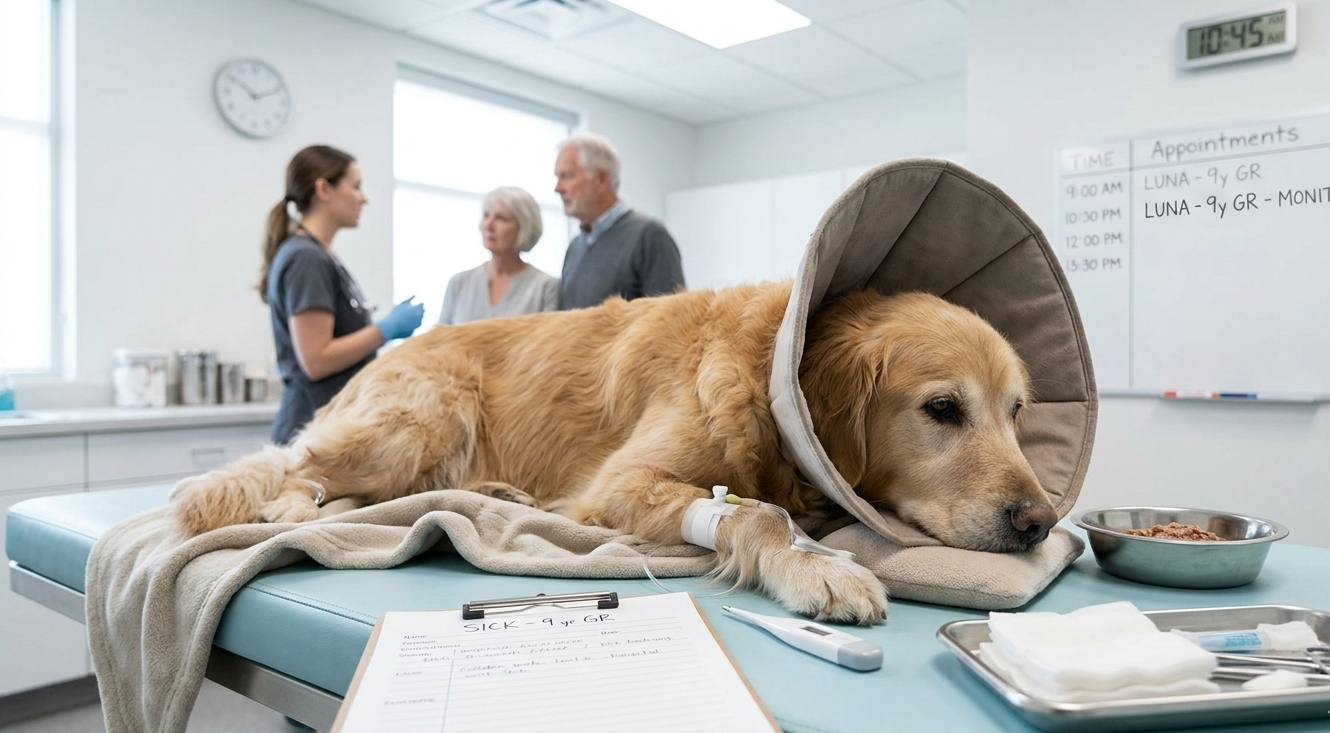
My dog, Cooper—a 9-year-old Golden Retriever who still acted like a puppy—had a mass on his spleen. The vet explained the options calmly, clinically, while I sat there trying not to cry in the exam room. Surgery. Chemotherapy. Radiation, maybe. She handed me paperwork with cost estimates that made my stomach drop.
The surgery alone was $3,500. Chemo would be another $4,000 to $6,000 depending on how many rounds he needed. Follow-up appointments, bloodwork, medications—it all added up fast.
And then she said the thing that gutted me: “Without treatment, he has maybe 3 to 6 months. With treatment, we could give him another year, maybe two.”
I looked at Cooper, sitting there wagging his tail, completely oblivious. How could I not do everything possible?
So I said yes. I signed the paperwork. I maxed out a credit card. And I spent the next six months navigating a nightmare I wasn’t prepared for.
I’m not writing this to say I regret saving my dog. I don’t. But I wish someone had been honest with me about what “doing everything” actually meant—financially, emotionally, and for Cooper’s quality of life.
If you’re facing a similar decision right now, here’s what I wish I’d known before I said yes.
The Costs They Don’t Tell You About Upfront
When the vet handed me that estimate, I thought $8,000 was the number. It wasn’t.
That was just the baseline. The best-case scenario cost if everything went perfectly. Which, of course, it didn’t.
Here’s what I didn’t budget for:
Emergency vet visits. Cooper had complications after surgery—an infection, then internal bleeding. Two emergency vet trips at $800 and $1,200.
Medications. Anti-nausea meds, pain management, antibiotics, appetite stimulants. Easily another $600 over six months.
Specialized food. Cooper stopped eating his regular food. We tried prescription diets, then hand-fed him boiled chicken and rice. The vet recommended expensive, high-calorie supplements. Another $400.
Bloodwork and monitoring. Before every chemo session, Cooper needed bloodwork to make sure his body could handle it. $150 to $200 each time. We did eight rounds.
Travel costs. The oncologist was 45 minutes away. Gas, tolls, and time off work added up.
The hidden stuff. Cleaning supplies for accidents (chemo made him sick). Extra blankets and bedding because he was incontinent sometimes. Replacing items he destroyed during anxious episodes.
By the time it was over, we’d spent close to $11,000.
I’m lucky. I had savings. I had credit. But I know people who’ve taken out loans, started GoFundMes, or gone into serious debt for their pets. And I understand why—because when the vet is standing there telling you that you can save your dog’s life, saying no feels impossible.
What Treatment Actually Looked Like
Here’s another thing no one prepared me for: what the treatment would do to Cooper.
I thought chemo for dogs was gentler than chemo for humans. And maybe it is, technically. But it still sucked.
Cooper’s side effects:
- Vomiting and diarrhea after every session
- Lethargy that lasted for days
- Loss of appetite (he dropped 15 pounds)
- Hair loss around his muzzle and paws
- Increased anxiety and confusion
- Accidents in the house because he couldn’t control his bowels
Some days, he seemed okay. He’d wag his tail, want to go for a short walk, eat a little bit of chicken. Those days made it feel worth it.
But other days, he just looked… tired. He’d lie on his bed and stare at nothing. He stopped greeting me at the door. He flinched when I reached for him because he associated touch with vet visits and pain.
I kept telling myself: It’s temporary. Once treatment is over, he’ll feel better. We’re buying him time.
And we did buy him time. After the surgery and chemo, Cooper had seven good months. Seven months where he was mostly himself again—playing in the yard, stealing food off the counter, snuggling on the couch.
Then the cancer came back.
The Question No One Wants to Ask
When the cancer returned, the vet presented options again. More chemo. Palliative care. Euthanasia.
This time, I asked a question I hadn’t asked the first time: “If this were your dog, what would you do?”
She paused. Then she said, quietly, “I’d make him comfortable. I’d give him a few good weeks and let him go before he suffered.”
I wish I’d asked that question nine months earlier.
Don’t get me wrong—I don’t regret the time we had. Those seven good months mattered. But I also wonder: if I’d known the cancer would come back, would I have put him through all of that?
Would I have spent $11,000 and six months of invasive treatment for seven months of remission?
I honestly don’t know.
What I Wish I’d Known Before Saying Yes
If I could go back and talk to myself in that exam room, here’s what I’d say:
1. Ask about quality of life, not just quantity.
“How much time will this buy me?” is the wrong question. The right question is: “What will his life look like during treatment? And after?”
Will your dog be in pain? Will they be able to do the things they love? Will treatment make them miserable for months just to add a few more months at the end?
Quality matters more than quantity.
2. Get a second opinion.
I didn’t. I trusted the first vet and oncologist completely, and they were great. But I wish I’d talked to another specialist just to hear a different perspective on Cooper’s specific case—his age, his cancer type, his prognosis.
Some cancers respond well to treatment. Others don’t. A second opinion might have given me more clarity.
3. Ask for the realistic cost estimate.
Don’t just ask for the baseline. Ask: “What does this typically cost when things don’t go perfectly? What if there are complications?”
Most vets will give you a range. Push for the high end. Budget for that.
4. Talk about your financial limits upfront.
This feels terrible to say out loud, but it’s important: you are allowed to have a budget.
I didn’t tell my vet I was stretching financially to afford treatment. I just kept saying yes to everything. Looking back, I wish I’d been honest. She might have suggested a modified treatment plan that was less aggressive but also less expensive.
Vets aren’t judging you for having financial limits. They’d rather work with you to find a plan you can actually sustain.
5. It’s okay to choose palliative care instead of aggressive treatment.
Palliative care means keeping your pet comfortable without pursuing curative treatment. It’s pain management, quality of life, and making the most of the time you have left.
For some pets—especially older dogs or dogs with aggressive cancers—palliative care is the kindest option.
Choosing comfort over treatment doesn’t mean you love your dog less. It means you’re prioritizing their well-being over your guilt.
6. You don’t have to decide immediately.
When the vet gives you a diagnosis, you don’t have to commit to a treatment plan right there in the room.
Take 24 to 48 hours. Go home. Research. Talk to your family. Cry. Think about your dog’s personality, their age, what they’d tolerate, what you can handle emotionally and financially.
A few days won’t change the outcome, but it will give you space to make a clearer decision.
The Guilt Is Real, No Matter What You Choose
If you choose aggressive treatment and your dog suffers, you feel guilty.
If you choose palliative care and your dog dies sooner, you feel guilty.
If you choose euthanasia to prevent suffering, you feel guilty.
There is no choice that doesn’t come with guilt.
But here’s what I’ve learned: guilt doesn’t mean you made the wrong choice. It just means you loved your dog.
I spent $11,000 trying to save Cooper. Some people would say that’s too much. Others would say it’s not enough, that I should have done more.
But I’m the one who lived through it. I’m the one who held him during chemo. I’m the one who made the final call when the cancer came back.
And I know I did the best I could with the information I had at the time.
If You’re Facing This Decision Right Now
If you’re sitting in a vet’s office right now, hearing words like “cancer” or “treatment” or “expensive,” here’s what I want you to know:
You are not a bad person if you can’t afford treatment.
You are not a bad person if you choose palliative care over aggressive treatment.
You are not a bad person if you choose euthanasia to prevent suffering.
And you are not a bad person if you do choose aggressive treatment, even if it doesn’t work out the way you hoped.
Whatever you decide, it will be the right decision for you and your dog. Not for anyone else. Just for you two.
Ask the hard questions. Be honest about your limits. Think about quality of life, not just time.
And know that loving your dog doesn’t mean bankrupting yourself or putting them through suffering just to avoid saying goodbye.
Sometimes the most loving thing we can do is let go.
What Happened to Cooper
We said goodbye to Cooper on a Tuesday morning in May, almost exactly a year after his diagnosis.
The cancer had spread to his lungs. He was struggling to breathe. He wasn’t eating. He wasn’t himself anymore.
The vet came to our house. Cooper died peacefully on his favorite blanket in the backyard, with the sun on his face and my hand on his chest.
I don’t regret the money. I don’t regret the time. I don’t regret trying.
But I do wish I’d been more prepared for the reality of what “doing everything” actually meant.
I wish someone had told me it was okay to have limits.
I wish someone had reminded me that sometimes, love looks like letting go.
If you’re facing this decision, I hope this helps. I hope it gives you permission to make the choice that’s right for you—not the choice that makes you look like a good pet owner to everyone else.
Your dog doesn’t need you to go into debt or sacrifice everything. They just need you to love them and make the kindest choice you can in an impossible situation.
And whatever you decide, that will be enough.
Leave a Reply