If you’ve ever typed what should I feed my pet into Google and immediately felt overwhelmed, you’re not alone.
This question usually shows up late at night. You’re scrolling through conflicting advice, comparing labels that don’t make sense, and quietly worrying that one wrong choice could harm the animal you love.
One article says grain-free pet food is best. Another warns against it. Social media has strong opinions. Pet food bags are full of buzzwords. And suddenly, feeding your pet feels more complicated than it should be.
Quick answer: If you’re wondering what to feed your pet, start with the basics. Choose food made for your pet’s species and life stage, prioritise a clear protein source, and pay attention to how your pet’s energy, digestion, and coat respond over time. The best pet food is the one your pet consistently does well on—not the trendiest option on the shelf.
This guide is here to calm that noise.
By the end, you’ll know how to choose pet food without second-guessing every label, trend, or opinion—and feel confident that you’re doing right by your pet.
No scare tactics. No brand pushing. Just practical guidance that works in real life.
Why Choosing the Right Pet Food Feels So Hard
Pet owners aren’t confused because they don’t care. They’re confused because the pet food world is genuinely confusing.
Here’s what makes it difficult:
-
Too many options that all claim to be “the best food for pets”
-
Labels filled with terms that sound scientific but explain very little
-
Marketing that turns everyday choices into high-pressure decisions
-
Online advice that’s extreme and often contradictory
-
Friends and forums swearing by completely different foods
If you’ve ever stood in a pet store aisle holding two bags and thinking, “I just want something healthy—why is this so hard?” that reaction is completely normal.
It can feel like one wrong choice could harm your pet. In reality, most pets do well on many different foods when the basics are right.
There is no single best pet food for every animal—and accepting that makes this process much easier.
What Should I Feed My Pet? Start With These Basics
Before you worry about ingredients, trends, or packaging, start here. These basics matter more than most people realise.
Age
Puppies, kittens, adults, and senior pets have different nutritional needs. Feeding the right life stage supports growth, maintenance, or healthy aging.
Species (This Is Non-Negotiable)
Dog food vs cat food is not interchangeable. Cats are obligate carnivores and need meat-heavy diets. Dogs are more flexible. Small pets have entirely different requirements.
Always choose food designed specifically for your pet’s species.
Size and Activity Level
A highly active dog that runs daily will need different fuel than a calm, indoor dog that prefers lounging. The same goes for cats—an energetic kitten and a senior cat won’t thrive on identical diets.
Activity level plays a major role in pet nutrition basics, even within the same breed.
Health Needs
Sensitive digestion, skin issues, weight changes, or picky eating don’t mean you’ve failed. They’re signals your pet may need adjustments—not perfection.
Getting these fundamentals right quickly narrows your options and removes a lot of unnecessary stress.
Understanding Pet Food Ingredients (What Actually Matters)
Pet food ingredients don’t need to feel like a chemistry lesson. You’re looking for balance, not a flawless label.
Protein
Protein supports muscle, energy, and overall health. Look for a clearly named protein source listed early. This matters more than chasing the highest number.
Carbohydrates
Carbs aren’t automatically bad. They provide energy and structure. The real issue is low-quality carbs used in excess—not carbs themselves.
Fats
Fats support energy, skin, and coat health. Healthy pet food includes fats in appropriate amounts, not avoids them entirely.
Fillers
This term is often misunderstood. Some ingredients are less nutritious, but unfamiliar doesn’t mean harmful.
A simple rule many pet owners find helpful: ignore the marketing on the front of the bag and look at the first few ingredients instead. Clearly named foods near the top are usually a better sign than vague buzzwords.
Pet food ingredients matter—but how your pet does on the food matters more.
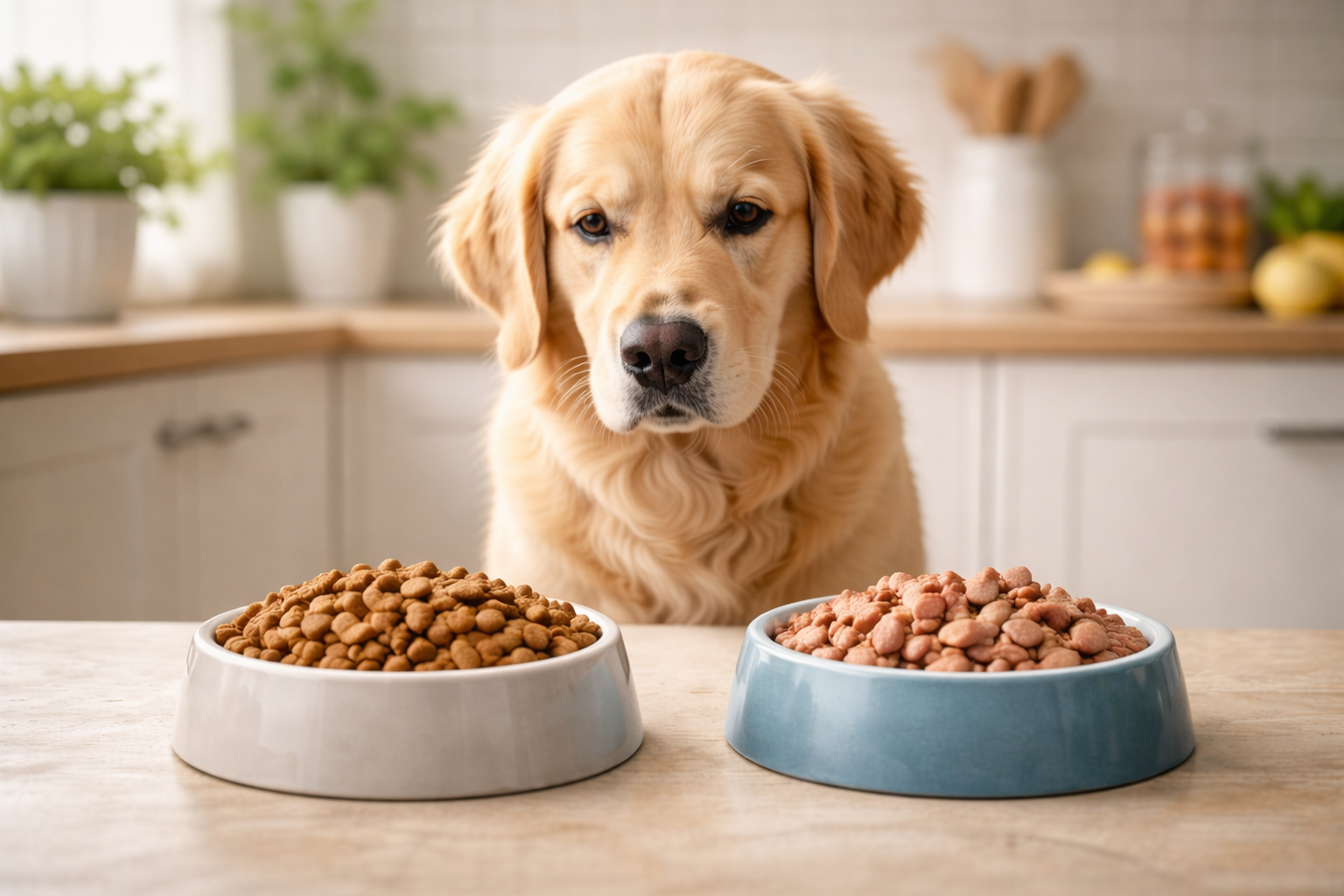
Wet vs Dry Pet Food: Which Is Better?
This is one of the most common pet food debates, and the honest answer is: neither is universally better.
Dry Pet Food
Pros
-
Convenient and easy to store
-
Often more affordable
-
Simple portion control
Cons
-
Lower moisture content
-
Some pets find it less appealing
Wet Pet Food
Pros
-
Higher moisture, which can support hydration
-
Often more palatable
Cons
-
More expensive
-
Shorter shelf life once opened
Hydration needs—not food type—are often the real issue. Many pet owners successfully use a mix of wet vs dry pet food based on their pet’s preferences and daily routine.
Common Pet Food Myths That Confuse Pet Owners
“Grain-free pet food is always better”
Grain-free helps some pets and makes no difference for others. It’s not automatically healthier.
“Expensive means healthy”
Price often reflects branding and marketing. Some affordable options meet pet nutrition basics just fine.
“One brand fits all pets”
A common mistake people make is assuming what works for one pet will work for all. Even pets of the same species can respond very differently.
If advice sounds absolute, it usually ignores how individual pets actually are.
How to Choose the Best Food for Your Pet (A Simple Checklist)
When you’re feeling stuck, come back to this:
-
Is it made for your pet’s species and life stage?
-
Does it list a clear protein source?
-
Does your pet eat it consistently and willingly?
-
Are their energy, coat, and digestion stable?
-
Can you afford and find it long-term?
That’s how to choose pet food with confidence.
The best food for pets isn’t the trendiest option—it’s the one that supports steady health over time.
Signs You’ve Chosen the Right Pet Food (or Need to Switch)
Your pet gives feedback every day. Over time, most pets clearly show whether a food is working.
Signs the food is working
-
Steady, reliable energy
-
Healthy-looking coat
-
Normal digestion
-
Consistent appetite
Signs it may not be
-
Ongoing stomach issues
-
Sudden refusal to eat
-
Dull coat or frequent itching
-
Unexplained weight changes
Needing to switch foods doesn’t mean you chose wrong. It means you’re paying attention—and that’s good pet care.
When It’s Time to Reevaluate Your Pet’s Food
Even a food that works well now may not be right forever. It’s often worth reassessing when:
-
Your pet moves into a new life stage
-
Activity levels change
-
You notice gradual weight or energy shifts
-
Seasons change and routines adjust
-
Another pet joins the household
Reevaluation isn’t failure—it’s part of responsible feeding.
A Reassuring Final Thought
If you’re worried about feeding your pet correctly, that already tells us something important: you care.
Healthy pet food isn’t about finding the “perfect” option. It’s about thoughtful choices, consistency, and learning your pet over time.
You don’t need the internet’s idea of the best pet food. You need what works for your pet.
Bookmark this and check back in a couple of weeks after observing your pet’s coat, energy, and digestion—that’s real information you can trust.
And if you know another pet owner overwhelmed by food choices, this guide may help them too.
Leave a Reply