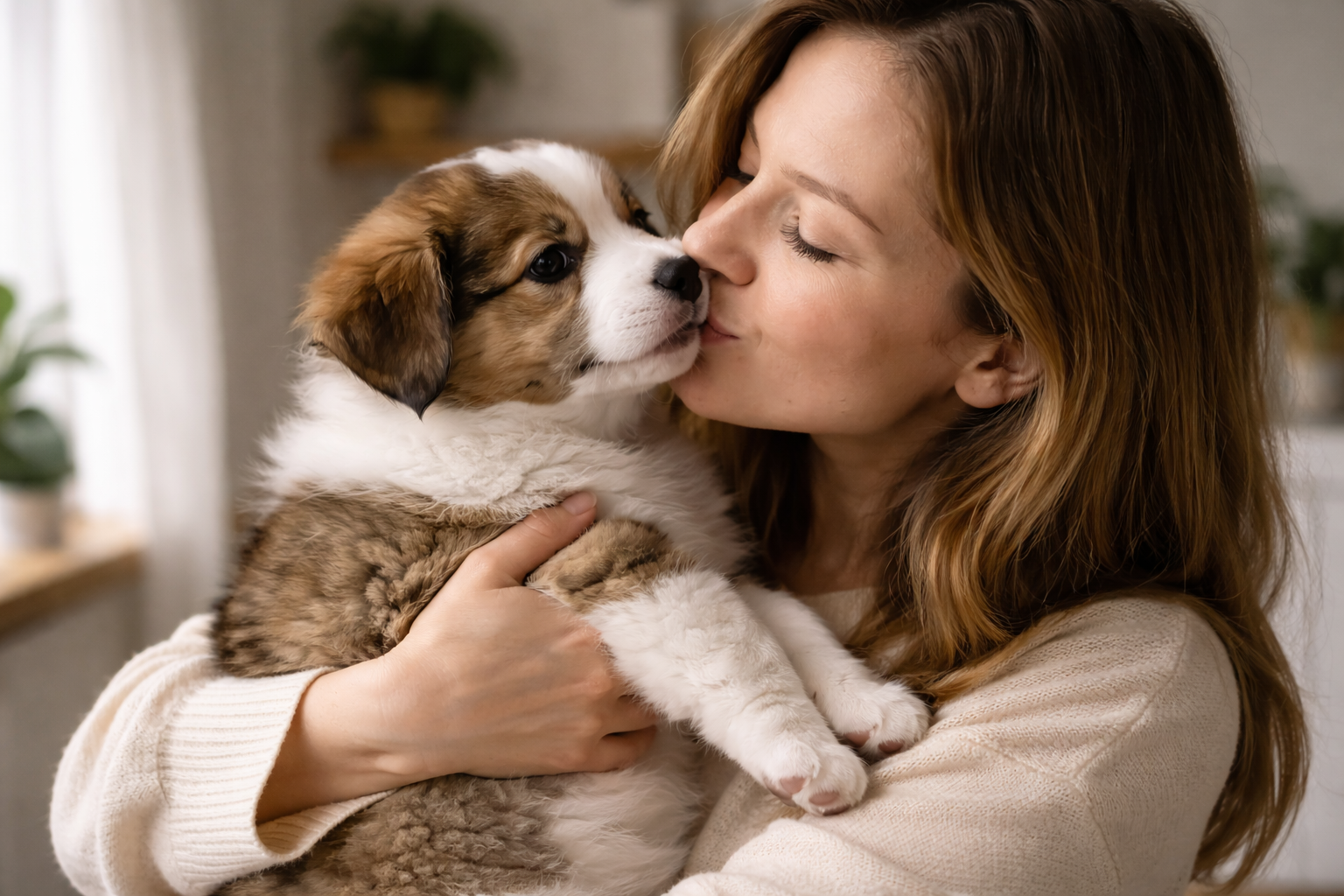
Congratulations! You’re officially a puppy parent. Welcome to the club of sleepless nights, chewed-up shoes, and more love than you ever thought possible.
So you brought home that adorable ball of fluff, and for the first few hours, everything was magical. They explored. They nuzzled. They fell asleep in your lap. You took 47 photos and sent them to everyone you know.
And then reality hit.
Maybe they peed on your carpet. Maybe they cried all night. Maybe they’re currently gnawing on your couch leg while you frantically Google “how to stop puppy from destroying everything.”
Deep breath. You’ve got this.
At petineeds, we believe pets are a big deal—and that means setting them up for success from day one. This isn’t just about surviving puppyhood (though we’ll help you do that too). It’s about raising a happy, healthy, well-adjusted dog who fits seamlessly into your life.
Let’s break down exactly what you need to do in those critical first days, weeks, and months with your new puppy.
The First 24 Hours: Survival Mode
The first day home is overwhelming for everyone—you AND your puppy. Your puppy just left their mom, their littermates, and everything familiar. Your house is full of new smells, sounds, and people. They’re confused, overstimulated, and probably a little scared.
Your mission for day one: Make them feel safe.
Set Up a Safe Space
Before your puppy even arrives, designate one area as “puppy headquarters.” This could be:
- A pen or gated section of a room
- A crate with the door open in a quiet corner
- A puppy-proofed bathroom or laundry room
Include:
- A cozy bed or blanket
- Water bowl
- A few safe toys
- Pee pads (if you’re using them)
This space is where your puppy can retreat when they’re tired, scared, or overstimulated. It’s their den. Don’t let kids swarm them here. Don’t constantly pick them up. Let them decompress.
Keep It Low-Key
Resist the urge to throw a “meet the puppy” party on day one. Yes, everyone wants to meet them. But your puppy needs time to adjust.
First 24 hours rules:
- Limit visitors
- Keep noise levels calm
- Let your puppy explore at their own pace
- Don’t force interactions
- Expect accidents (they WILL happen)
Establish a Potty Routine Immediately
Take your puppy outside to the same spot every 1-2 hours. Yes, every 1-2 hours. Also take them:
- Right after they wake up
- Right after eating or drinking
- After playtime
- Before bed
When they go potty outside, celebrate like they just won an Olympic gold medal. Treats, praise, the whole thing. Make it clear: outside = awesome.
Expect a Rough First Night
Your puppy will probably cry the first night. They’re lonely, scared, and missing their littermates.
How to help:
- Put their crate or bed near your bed so they can hear you breathing
- Include a ticking clock or white noise machine (mimics mom’s heartbeat)
- A warm (not hot) water bottle wrapped in a towel can provide comfort
- A piece of clothing that smells like you
- Resist the urge to take them into your bed (unless you want that to be permanent)
It’s heartbreaking, but it gets better. Usually by night 3-5, they settle in.
Week 1: Building Routine and Trust
Puppies thrive on routine. The more predictable their life is, the faster they adjust.
Create a Daily Schedule
Structure helps puppies feel secure and makes house training infinitely easier.
Sample puppy schedule:
- 7:00 AM – Wake up, immediate potty break 7:15 AM – Breakfast 7:30 AM – Potty break
- 7:45 AM – Playtime 8:15 AM – Nap in crate
- 10:00 AM – Potty break, short training session 10:30 AM – Playtime
- 11:00 AM – Nap 12:00 PM – Lunch, potty break 12:30 PM – Play and explore
- 1:30 PM – Nap 3:00 PM – Potty break, short walk (if fully vaccinated) 4:00 PM – Nap
- 5:30 PM – Dinner, potty break 6:00 PM – Playtime with family
- 7:00 PM – Potty break, calm down time 8:00 PM – Last meal (for young puppies)
- 8:30 PM – Final potty break 9:00 PM – Bedtime in crate
Adjust based on your puppy’s age and energy levels, but consistency is key.
Stock Up on Essentials
The petineeds new puppy checklist:
Food & Water:
- High-quality puppy food (same brand the breeder/rescue used initially)
- Stainless steel or ceramic bowls
- Slow-feeder bowl (if they inhale food)
Potty Training:
- Pee pads (optional)
- Enzymatic cleaner for accidents
- Outdoor leash for potty breaks
Sleep & Comfort:
- Appropriately sized crate
- Cozy bed or blankets
- Crate cover (optional, helps some puppies settle)
Play & Enrichment:
- Variety of safe toys (rubber chew toys, plush toys, rope toys)
- Puzzle toys for mental stimulation
- Teething toys (frozen washcloths work great)
Training:
- Small, soft training treats
- Clicker (optional but helpful)
- 6-foot leash
- Collar with ID tag
Health & Grooming:
- Puppy-safe shampoo
- Nail clippers or grinder
- Brush appropriate for their coat type
- Toothbrush and puppy toothpaste
Safety:
- Baby gates to block off areas
- Outlet covers
- Cord protectors
You don’t need to buy everything at once, but having the basics ready makes life easier.
Start Crate Training
Crate training gets a bad rap, but when done right, it’s a gift to your puppy. The crate becomes their safe den—a place where they can relax, sleep, and feel secure.
How to introduce the crate positively:
- Leave the crate door open with treats and toys inside. Let them explore.
- Feed meals inside the crate (door open).
- Toss treats in randomly throughout the day.
- Once they’re comfortable, close the door for a few seconds while they’re eating. Open immediately.
- Gradually increase door-closed time.
- Practice short absences while they’re in the crate.
Crate training rules:
- Never use the crate as punishment
- Don’t leave them crated for longer than they can hold their bladder (general rule: age in months + 1 = hours)
- Make it cozy with a blanket and safe toy
- Cover three sides to make it den-like
Begin Basic Socialization
The critical socialization window is 3-16 weeks. This is when puppies are most open to new experiences. What they encounter during this time shapes their adult personality.
Safe socialization ideas (before full vaccinations):
- Invite calm, vaccinated dogs to your home
- Let them meet different types of people (kids, men with beards, people in hats, etc.)
- Expose them to household sounds (vacuum, doorbell, TV)
- Carry them to different environments and let them observe (don’t put them down in public yet)
- Play recordings of various sounds (fireworks, thunder, traffic)
After vaccinations:
- Puppy socialization classes
- Dog-friendly stores
- Parks and trails
- Coffee shop patios
The goal: positive exposure to as many people, places, sounds, and experiences as possible. Always keep it positive. If your puppy seems scared, don’t force it—go slower.
Weeks 2-8: Training, Boundaries, and Patience
Now that your puppy is settling in, it’s time to establish expectations and start training.
House Training: Consistency Is Everything
Most puppies can be fully house trained by 4-6 months if you’re consistent.
Keys to success:
Frequent potty breaks. Until they have bladder control, take them out constantly.
Reward immediately. The second they finish going potty outside, give a treat and praise. Timing matters.
Supervise constantly. If you can’t watch them, they should be in their crate or confined space.
Interrupt accidents calmly. If you catch them mid-pee, calmly say “outside” and take them to their potty spot. No yelling. Finish outside, reward.
Clean accidents thoroughly. Use an enzymatic cleaner to remove all scent. If they can still smell it, they’ll go there again.
Watch for signals. Sniffing, circling, whining, heading toward the door—these are pre-potty cues. React immediately.
Bite Inhibition: Teaching Gentle Mouths
Puppies explore the world with their mouths. Unfortunately, those needle-sharp teeth hurt.
How to teach bite inhibition:
- When your puppy bites too hard during play, say “ouch!” in a high-pitched voice and stop playing immediately.
- Turn away and ignore them for 10-15 seconds.
- Resume play.
- Repeat every time they bite hard.
They’ll learn: biting hard = fun stops. Gentle mouth = play continues.
Also:
- Redirect biting to appropriate toys
- Keep a toy handy during play
- Avoid games that encourage biting (like rough hand play)
- Give them frozen toys when teething
Basic Commands: Start Simple
Puppies have short attention spans, so keep training sessions to 5-10 minutes, 2-3 times per day.
Start with these four commands:
Sit: Hold a treat above their nose, move it back over their head. Their butt will drop. Say “sit,” reward immediately.
Come: Use a happy, excited voice. Say their name + “come!” Reward when they reach you. Practice in low-distraction environments first.
Down: From a sit, lower a treat to the ground between their paws. They’ll lie down to reach it. Say “down,” reward.
Leave it: Show a treat in your closed hand. Wait. When they stop trying to get it and look away, say “yes!” and give a different treat from your other hand.
Training tips:
- Use high-value treats (tiny pieces of chicken, cheese, or commercial training treats)
- End on a positive note (finish with something they know)
- Be patient—puppies learn through repetition
- Keep it fun
Set Boundaries Early
Decide what rules you want your adult dog to follow, and enforce them from day one.
Common boundaries:
- No jumping on people
- No begging at the table
- No getting on furniture (if that’s your rule)
- No pulling on leash
- Wait at doors before going through
It’s easier to establish rules now than to break bad habits later. Everyone in the household needs to be consistent.
Manage Destructive Chewing
Puppies chew. It’s not personal. It’s how they explore, soothe teething pain, and entertain themselves.
How to manage it:
Puppy-proof your home. Remove shoes, remote controls, cords, plants, anything chewable.
Provide appropriate chew toys. Rotate them to keep things interesting.
Redirect. If they’re chewing something they shouldn’t, calmly take it away and give them an appropriate toy. Praise when they chew the right thing.
Exercise their brain and body. A tired puppy is a well-behaved puppy.
Use bitter spray. Apply to furniture legs, cords, or other tempting items.
Don’t punish after the fact. If you find a chewed-up shoe hours later, your puppy has no idea why you’re upset.
Months 3-6: Building Confidence and Skills
Your puppy is growing fast. This is when their personality really starts to shine—and when some challenges emerge.
The Teenage Phase Is Real
Around 6-8 months, many puppies go through a “teenage” phase. They:
- Test boundaries
- Seem to “forget” training
- Get distracted easily
- Show more independence
This is normal. Stay consistent. Don’t give up on training. They’ll come out the other side.
Continue Socialization
Keep exposing your puppy to new experiences. The more they see now, the more confident they’ll be as adults.
Ideas:
- Visit pet-friendly stores
- Attend group training classes
- Arrange puppy playdates
- Take different routes on walks
- Expose them to various surfaces (grass, gravel, sand, grates)
- Practice being around bikes, skateboards, strollers
Always make it positive. Bring treats. Keep sessions short. If they’re scared, don’t force it.
Level Up Training
Once your puppy has mastered basic commands, add:
- Stay: Start with short durations, gradually increase
- Heel: Walking nicely on leash without pulling
- Drop it: Releasing objects from their mouth
- Place: Going to a designated spot and staying there
Consider enrolling in a group obedience class. Professional guidance helps, and the socialization is invaluable.
Establish a Grooming Routine
Get your puppy comfortable with handling now, so grooming isn’t a battle later.
Practice:
- Touching paws and between toes
- Looking in ears and mouth
- Brushing their coat
- Mock nail trims (touch clippers to nails without cutting)
- Baths (use a non-slip mat and lots of treats)
Pair every handling session with treats and praise. Make it a positive experience.
Vet Visits and Health Care
Your puppy will need:
- Multiple rounds of vaccinations (typically at 8, 12, and 16 weeks)
- Deworming
- Flea and tick prevention
- Heartworm prevention
- Spay/neuter (timing varies—discuss with your vet)
Keep up with these appointments. Your vet is your partner in raising a healthy dog.
The petineeds Puppy Mindset: What Really Matters
Here’s the truth: you’re going to make mistakes. Your puppy will have accidents. They’ll chew something expensive. You’ll lose your patience.
That’s okay. Puppyhood is messy, exhausting, and humbling.
But here’s what matters:
Consistency beats perfection. You don’t have to be a flawless dog trainer. You just have to be consistent with rules, routines, and positive reinforcement.
Patience is your superpower. Puppies aren’t being bad on purpose. They’re learning. Take a breath. Reset. Try again.
Bonding takes time. You might not feel that deep connection immediately, especially during the chaotic early weeks. That’s normal. The bond grows as you navigate challenges together.
Ask for help. Puppy raising takes a village. Use trainers, vets, experienced friends, online communities. You don’t have to figure it all out alone.
Celebrate small wins. Your puppy slept through the night? Huge. They finally sat on command? Amazing. Acknowledge progress.
At petineeds, we know that pets are a big deal—not just because they require effort, but because they’re worth it. Every sleepless night. Every chewed shoe. Every training session.
You’re not just raising a puppy. You’re building a relationship that will last 10, 12, 15 years. You’re shaping the dog they’ll become.
And that’s a really big deal.
Your Puppy Checklist: The First 90 Days
Week 1: ☐ Set up safe space ☐ Establish potty routine ☐ Start crate training ☐ Schedule first vet visit ☐ Begin household socialization
Weeks 2-4: ☐ Continue potty training consistency ☐ Introduce basic commands (sit, come) ☐ Puppy-proof home thoroughly ☐ Start bite inhibition training ☐ Maintain feeding schedule
Weeks 5-8: ☐ Enroll in puppy socialization class ☐ Practice leash walking ☐ Expand socialization experiences ☐ Continue command training ☐ Begin grooming routine
Months 3-6: ☐ Level up obedience training ☐ Address any behavior issues promptly ☐ Maintain socialization ☐ Schedule spay/neuter ☐ Celebrate progress!
You’ve Got This
Remember that tiny, scared puppy you brought home? Look at them now.
They’re learning. Growing. Trusting you. Becoming part of your family.
It won’t always be easy. There will be frustrating days. Days when you question everything. Days when you’re covered in puppy pee and wonder what you’ve gotten yourself into.
But there will also be moments of pure joy. When they finally “get” a command. When they curl up in your lap and fall asleep. When they greet you at the door like you’re the best thing in the world.
Those moments make everything worth it.
At petineeds, we’re here to support you every step of the way—with practical tips, honest advice, and a reminder that pets are a big deal, and so is the incredible job you’re doing raising yours.
Welcome to puppyhood. It’s exhausting, chaotic, and absolutely magical.
You’ve got a new puppy. Now you know what to do.
And we’re cheering you on every step of the way. 🐾
Need more puppy tips? Follow us on Instagram @petineeds for bite-sized advice, relatable pet parent moments, and everything you need to raise a happy, healthy pup. Because pets are a big deal—and so are you.
Leave a Reply