
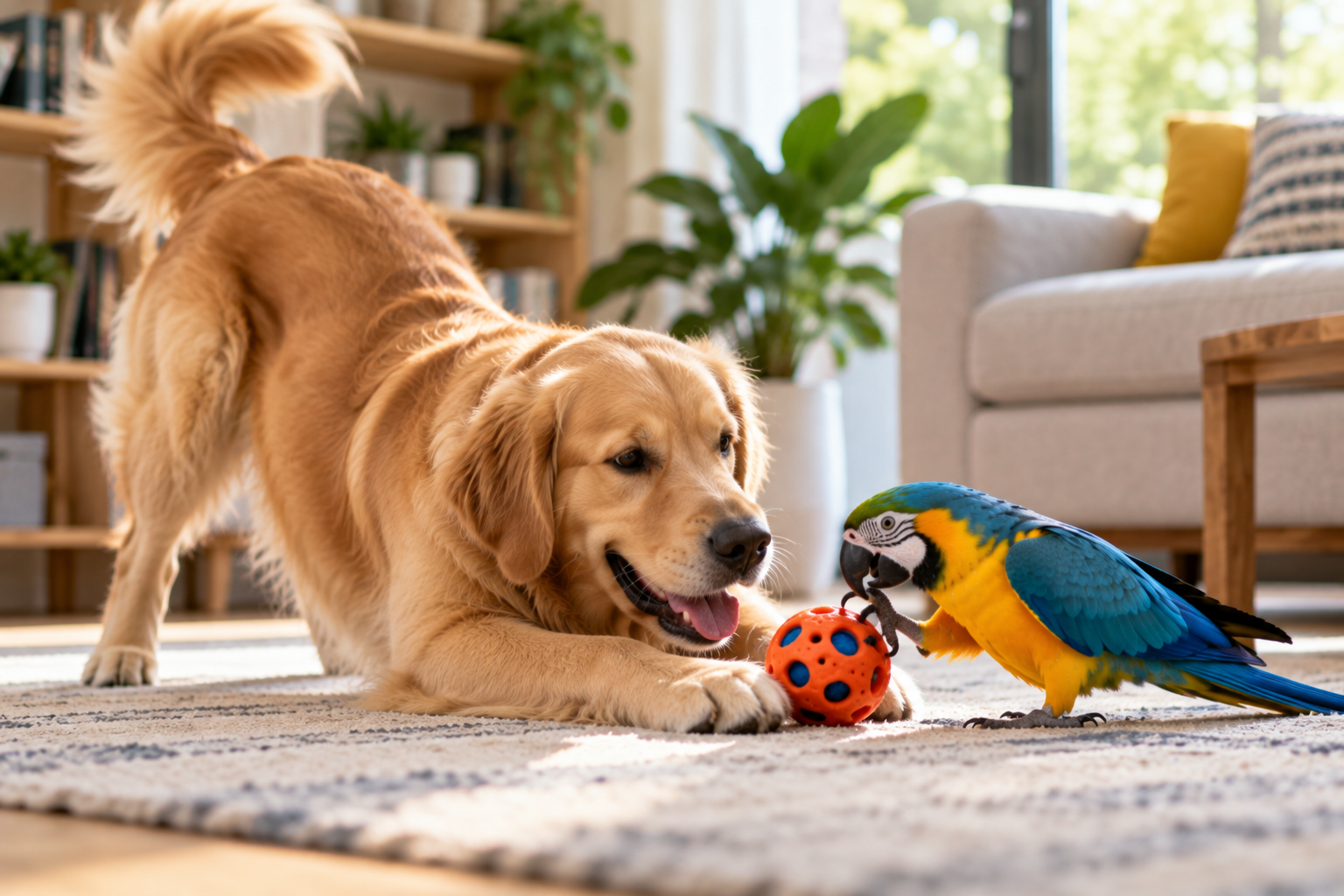
Would you pick a parrot over a dog?
For some people, the answer is an immediate no. Dogs are familiar, affectionate, and one of the most popular pets in American homes. But if you’ve ever spent time around a parrot, you probably know this debate isn’t as easy as it sounds.
Parrots are intelligent, social, entertaining, and full of personality. They can also be loud, demanding, messy, and surprisingly good at making their opinions known.
So if you had to choose between a parrot and a dog, which one would actually fit your life better?
What Is It Like Having a Parrot as a Pet?
One of the most interesting things about parrots is how interactive they can be.
Many parrot species are highly intelligent and need regular mental stimulation and social interaction. Depending on the bird, they may learn words and sounds, recognize routines, solve simple problems, play with toys, and develop strong bonds with the people who care for them.
That intelligence also comes with responsibility. Parrots need enrichment, appropriate toys, opportunities to forage and exercise, social interaction, and plenty of attention.
A smaller pet does not automatically mean an easier pet.
What About Having a Dog?
Dogs bring their own kind of companionship. They can be affectionate, playful, social, and deeply connected to the people they live with.
They also require a lot of commitment. Feeding, walks, exercise, training, grooming, veterinary care, and regular attention all become part of your routine.
For someone who enjoys being outdoors, taking walks, training, and having a pet that can participate in activities outside the home, a dog may be the obvious choice.
But that lifestyle isn’t right for everyone.
Is a Parrot Easier to Care for Than a Dog?
Not necessarily.
Parrots don’t need daily walks, but they have very different care requirements. They need an appropriate diet, safe housing, regular cleaning, enrichment, social interaction, and access to veterinary care from someone experienced with birds.
Noise is another consideration. Some parrots can be very loud, which may not work for every household or apartment.
There is also the long-term commitment. Depending on the species, some parrots can live for several decades. Anyone considering adopting a parrot should understand that this may be a relationship that lasts for a significant part of their life.
Can Parrots Be Affectionate?
Absolutely, although parrot affection may look different from what dog parents are used to.
Parrots can develop strong social bonds with their caregivers. Some enjoy being close to their people, interacting, playing, or simply hanging out nearby.
Every bird has its own personality, though. Species, socialization, previous experiences, and individual temperament can all influence how a parrot interacts with people.
Part of becoming a good bird parent is learning how your bird communicates rather than expecting it to behave like a dog with feathers.
Which Pet Is Better: A Parrot or a Dog?
There isn’t a universal winner.
The better question is: Which animal are you better prepared to care for?
Think about your schedule, living situation, budget, tolerance for noise, access to veterinary care, and how much time you can realistically give your pet.
Dogs and parrots can both make wonderful companions, but they need very different things from their humans.
Choosing a pet shouldn’t be about which animal is more popular. It should be about understanding the animal’s needs and deciding whether your lifestyle allows you to meet them responsibly.
Now We Want to Hear From You
Let’s settle this one in the Petineeds community.
If you had to choose, would you pick a parrot or a dog?
If you’re already a bird parent, tell us what people misunderstand most about living with a parrot. And dog parents, you’re welcome to defend your side too.
At Petineeds, we’re building for all kinds of pet parents. Dogs and cats may get most of the attention online, but birds, fish, rabbits, guinea pigs, reptiles, and other pets are a big deal here too.
Join the Petineeds community and be part of the conversation.
Leave a Reply