
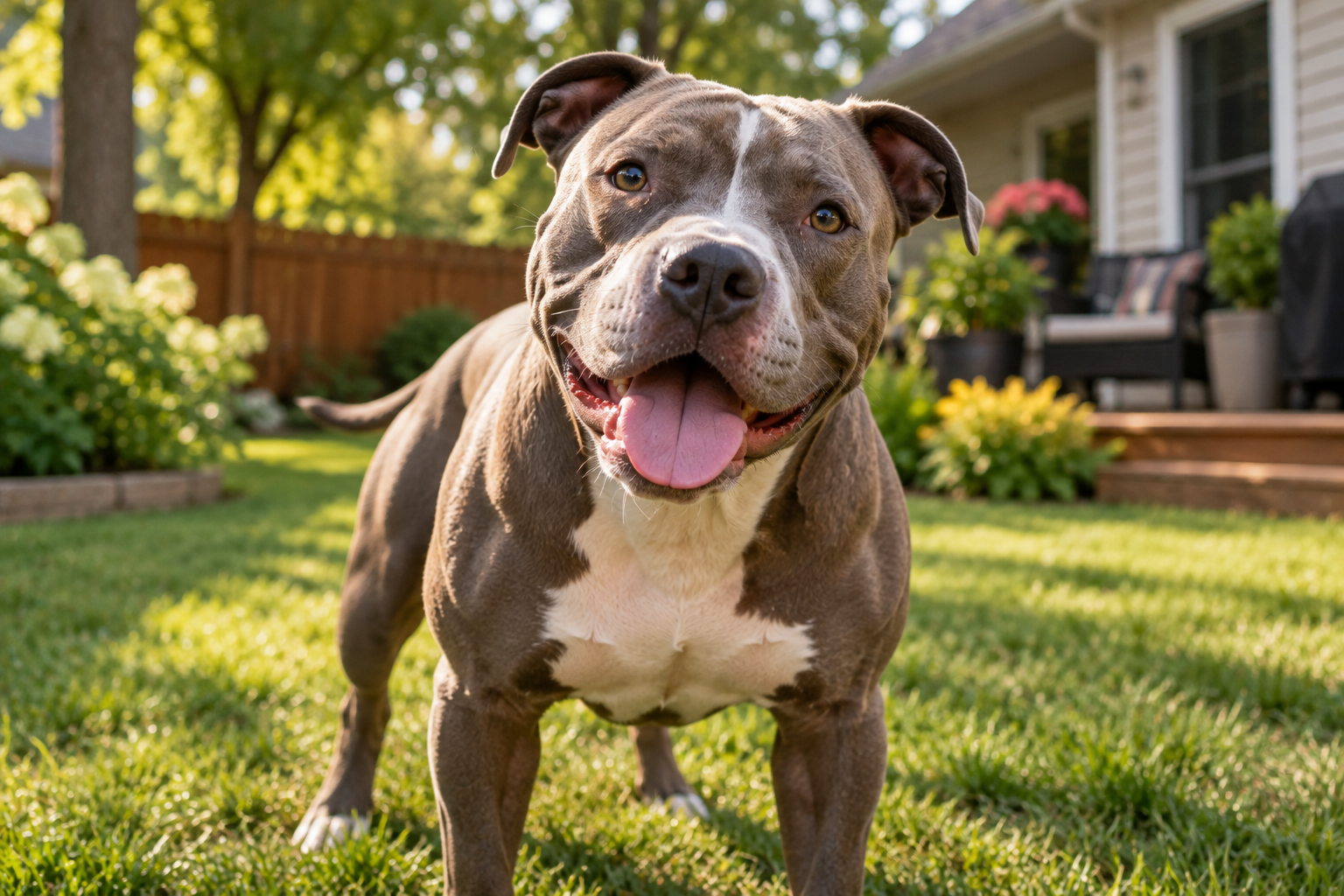
Mention getting a pit bull and there is a good chance someone will have an opinion.
Some people love them. Others immediately think of aggression, dog bites, or dangerous behavior. In some neighborhoods and rental properties, simply owning a dog identified as a pit bull can create additional challenges.
But where does that fear come from, and how much of what people believe about pit bulls is based on the individual dog versus the reputation surrounding the name?
The answer is more complicated than choosing between “pit bulls are dangerous” and “pit bulls are misunderstood.”
What Do We Actually Mean by “Pit Bull”?
One reason conversations about pit bulls can become confusing is that “pit bull” is often used as a broad label rather than the name of one specific breed.
The term may be used to describe the American Pit Bull Terrier and several other breeds or mixed-breed dogs with similar physical characteristics, such as a muscular build, broad head, and short coat.
Visual breed identification can also be unreliable, particularly with mixed-breed dogs. That matters when discussing bite statistics, housing restrictions, or assumptions about a dog’s behavior because dogs may be labeled as pit bulls based largely on appearance.
Why Do Pit Bulls Have a Reputation for Being Dangerous?
The fear did not appear out of nowhere.
Pit bull-type dogs have historically been associated with dog fighting, and their strength means that incidents involving these dogs can be serious. Highly publicized attacks have also contributed to a public image that connects the pit bull label with aggression.
Media coverage can strengthen that perception. When people repeatedly hear about serious incidents involving dogs described as pit bulls, it becomes easy to assume that the label alone tells us how an individual dog will behave.
That is where the conversation needs more context.
Does Breed Determine Whether a Dog Will Be Aggressive?
Breed can influence certain behavioral tendencies, but it is not the only factor that determines a dog’s behavior.
The American Veterinary Medical Association notes that it is inappropriate to predict a particular dog’s aggressive behavior based solely on its breed. A dog’s behavior can be influenced by genetics, early experiences, socialization, training, health, environment, supervision, and the way people interact with the animal.
This doesn’t mean breed characteristics should be ignored. Understanding the physical and behavioral traits of any dog is part of responsible pet ownership. But assuming every dog that looks like a pit bull will behave the same way oversimplifies a much more complicated issue.
Why Are Some Apartments and Communities Hesitant About Pit Bulls?
For pit bull parents, the stigma can have practical consequences.
Some landlords, homeowners associations, and insurance policies have historically placed restrictions on certain dog breeds or breed types. Local laws in some places have also included breed-specific restrictions.
These policies are often based on concerns about safety and liability, but they remain controversial. Organizations including the American Veterinary Medical Association have supported approaches that focus on responsible ownership and the behavior of individual dogs rather than policies based solely on breed.
If you’re considering adopting a pit bull or pit bull-type dog, it is worth checking your local laws, lease agreement, homeowners association rules, and insurance coverage before bringing the dog home.
What Should You Consider Before Adopting a Pit Bull?
The same basic rule that applies to every pet applies here: understand the animal you’re bringing into your home.
Meet the individual dog. Ask about its known history, behavior, energy level, health, and previous experiences. If you’re adopting from a shelter or rescue, ask what staff or foster caregivers have observed.
You should also consider whether you have the time and resources for training, exercise, veterinary care, enrichment, and proper supervision.
A strong dog requires an owner who can manage that strength responsibly. That isn’t an insult to pit bulls. It’s part of honestly assessing whether a particular animal is right for your household.
Families with children or other pets should also discuss those circumstances with the shelter, rescue, breeder, veterinarian, or qualified behavior professional when deciding whether an individual dog is a suitable match.
Fear and Responsible Pet Ownership Can Be Discussed at the Same Time
Conversations about pit bulls often become unnecessarily divided.
One side may treat every pit bull as dangerous. The other may respond by insisting there is nothing to be concerned about.
Neither approach is particularly useful to someone trying to make a responsible decision about a pet.
We can challenge unfair assumptions about dogs based purely on appearance while still acknowledging that every dog has individual behavioral and physical needs. Responsible pet parenting means learning about those needs, providing appropriate training and socialization, supervising animals properly, and paying attention to behavior rather than relying on stereotypes.
Would You Keep a Pit Bull?
We want to hear from pet parents on this one.
Would you feel comfortable having a pit bull in your home? If you already have one, what do you wish more people understood about your dog? And if you’re uncomfortable around pit bulls, what shaped that opinion?
At Petineeds, we want our community to be a place where pet parents can have these conversations without turning every disagreement into a fight.
Different pets come with different needs, personalities, and responsibilities. The more we understand them, the better decisions we can make for both pets and the people who live around them.
Join the Petineeds community and share your experience.
Leave a Reply